

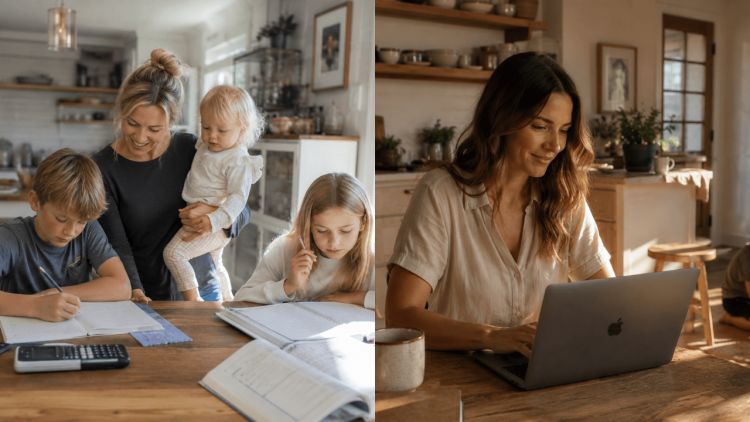
It is 9 a.m. on a Tuesday in Austin, Texas, and school is in session at the kitchen table. A ten-year-old works through a math lesson while her brother reads on the sofa and their mother answers email over coffee. By noon, the academic part of the day is done. The afternoon holds a swim class, a library run, and free time. This is a school day. The kitchen is the school.
Scenes like this have quietly become normal in the United States. Researchers estimate that more than three million American children now learn at home rather than in a classroom, up from roughly 2.5 million before the pandemic. What began as an emergency arrangement in 2020 turned into a lifestyle many families chose to keep. And like every lifestyle of the past decade, it has grown its own aesthetic, its own vocabulary, and its own apps.
Behind the kitchen-table photos sits an unglamorous truth: running a school means doing the administration. Education rules are set state by state, and many states ask families for records, like attendance counts or portfolios of work. So the trend now has its own software: the homeschool planning and record-keeping platform Numa School exists so a parent can plan the year, log the lessons, and keep the documents their state asks for in one place. What no platform can settle is the far more interesting question, the one every family answers differently: when you get to design a school day from scratch, what should it look like?
The School Day That Ends by Lunch
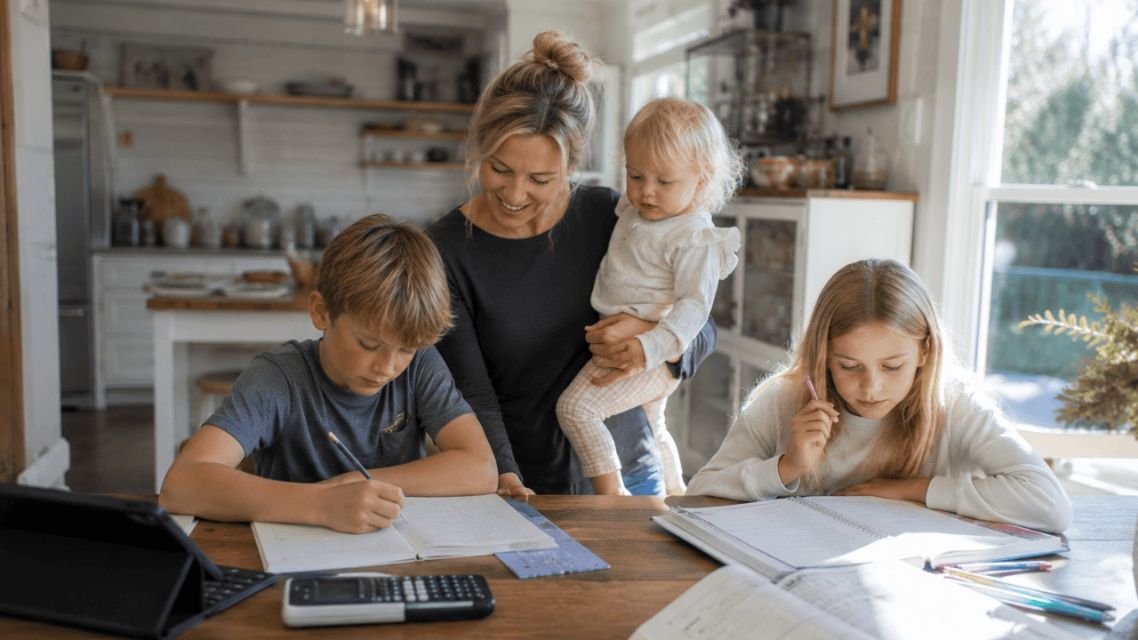
School can end by lunch. via numaschool.com
The most surprising thing about the learn-at-home day is how short it is. A classroom of thirty children spends a lot of its time on logistics: lining up, settling down, waiting for the last student to finish. Strip all of that away and one child working closely with one adult can cover a full day of academics in two or three focused hours. Most learn-at-home families in the US run exactly that schedule. Reading, writing, and math happen in the morning, when attention is fresh. By lunch, the formal part is over.
The afternoon is where the lifestyle really shows. Music lessons, sports, art classes, long stretches at the library. Museums and parks are empty on weekday mornings, so these families treat the whole city as a campus while everyone else is at a desk. Teenagers use the flexible hours for part-time jobs, serious athletic training, or building something of their own. If you have ever scrolled a “day in my life” video and wondered who actually lives like that, the answer increasingly includes twelve-year-olds.
Microschools in the Living Room

Learning in small groups. via canva.com
The word “homeschool” suggests one family alone at a table, but the modern version is far more social and far more mixed. The fastest-growing format sits somewhere between home and school: the microschool. Five to fifteen children gather in a living room, a garage, or a small rented space, sometimes taught by a hired teacher, sometimes by parents taking turns. It looks less like a school and more like a very organized playdate with a curriculum.
Around it sits a whole menu of options families combine freely. Hybrid programs offer two days on a campus and three days at home. Online academies run live classes with students scattered across the country. Co-ops let one parent teach science to a group while another handles writing. A single child might do math through an app, literature in a neighbor’s dining room, and biology at a weekly lab class. Families assemble an education the way this generation assembles everything else: piece by piece, from several sources, tuned to taste.
The menu is wide enough that the obvious outsider question is where anyone starts. Guides on how families actually begin homeschooling mostly agree on the first moves: a look at the local rules, one subject to start with, and a first weekly schedule that gets rewritten by October. The polish comes later, if it comes at all.
A Generation That Already Learns This Way
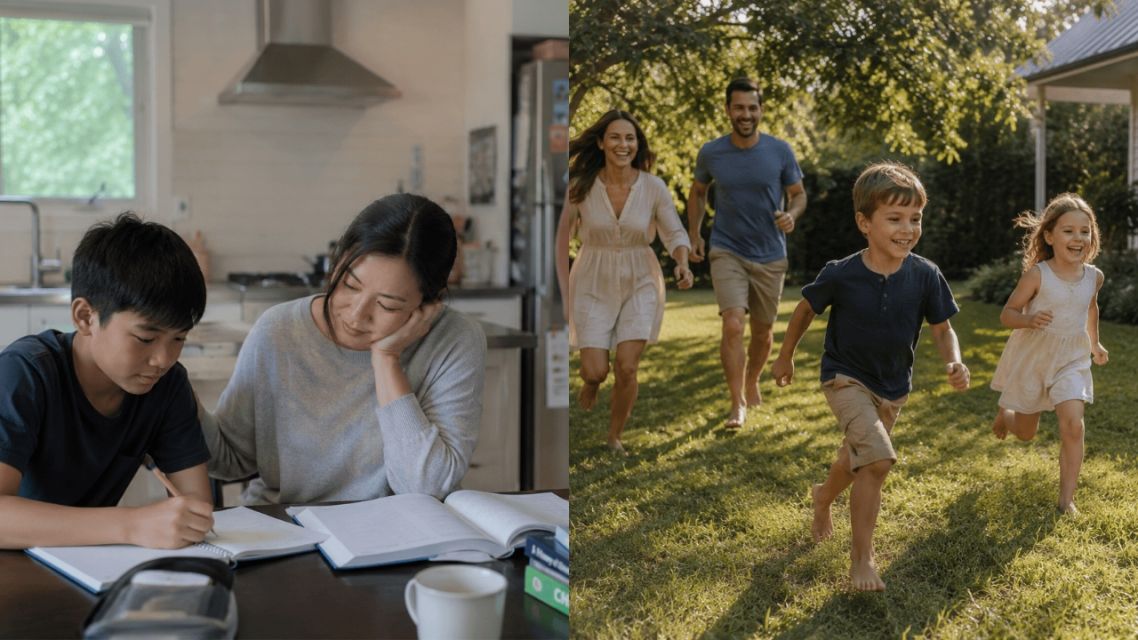
Learning beyond the classroom. via numaschool.com
If you are in your twenties and reading this in Jakarta, the logic of all this probably feels less foreign than it should. You have likely finished an online course at 1 a.m., learned a skill from a video series, or earned a certificate that mattered more to an employer than where you sat while earning it. Work itself went remote or hybrid for millions of people. The idea that learning is a thing you do, rather than a building you go to, is already the operating assumption of an entire generation.
The American learn-at-home boom is that same assumption arriving at childhood. Many of the parents driving it are remote workers themselves, already home during the day and already comfortable managing their own schedules. Some families take it further and travel while they learn, a style its practitioners call worldschooling, doing fractions in the morning and a temple visit in the afternoon. The reasons families give are usually practical and personal: a child who needs a faster or slower pace, a family calendar that never matched the school one, a preference for mornings without a commute.
Freedom Comes With Homework for the Parents
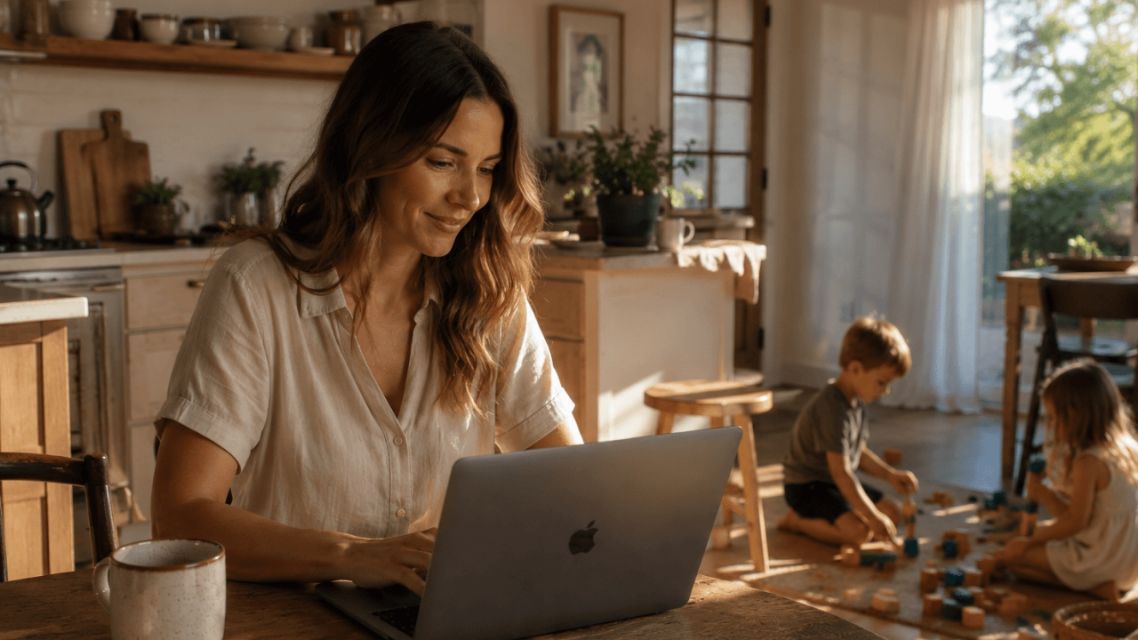
Parents manage the learning, too. via numaschool.com
None of this is effortless, and the families living it are usually the first to say so. Someone has to be home, which often means one parent trading income for time. Someone has to choose the curriculum, plan the weeks, keep the records, and notice when a subject is not landing. The parent becomes teacher, principal, and administrator at once, and burnout is a real topic in these communities. The photogenic two-hour school day is built on a quiet layer of adult planning that never makes it into the video.
Still, the trend keeps growing, and the reason may be less about education than about time. These families looked at the default shape of childhood, the 7 a.m. alarm and the fixed timetable, and decided the shape itself was up for redesign. In that sense they are asking about childhood exactly what their generation of workers has been asking about the office: once the schedule is finally yours to arrange, what do you actually build with it? So far, one early answer looks like a kitchen table in Texas, cleared and quiet by noon.