

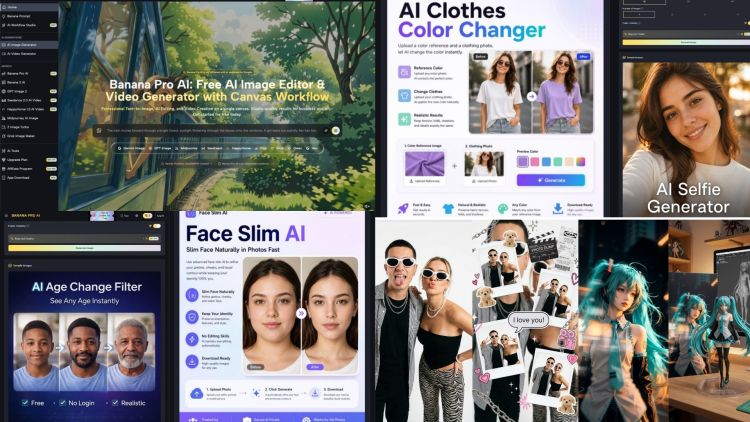
The most significant barrier to using generative media in a professional production environment is not the quality of the individual frame, but the stability of the subject across a sequence. For creative operations leads, the novelty of a high-fidelity output fades the moment a character’s jawline shifts five degrees or their attire changes texture between shots. This “character drift” is more than a visual nuisance; it is a financial drain that increases post-production retouching hours and often renders entire batches of generated assets unusable for narrative consistency.
The industry has largely moved past the “prompt-and-pray” era. Relying on a hyper-specific text prompt to recreate the same person or object across multiple lighting conditions and angles is statistically unlikely to yield a commercial-grade result. Professional workflows now prioritize latent stability—the ability of a model to lock onto a specific set of geometric and textural coordinates and maintain them across disparate generations. Solving this requires a shift from creative exploration to a structured technical pipeline, often centered around specialized tools like Nano Banana Pro.
The Persistent Identity Crisis in Generative Media
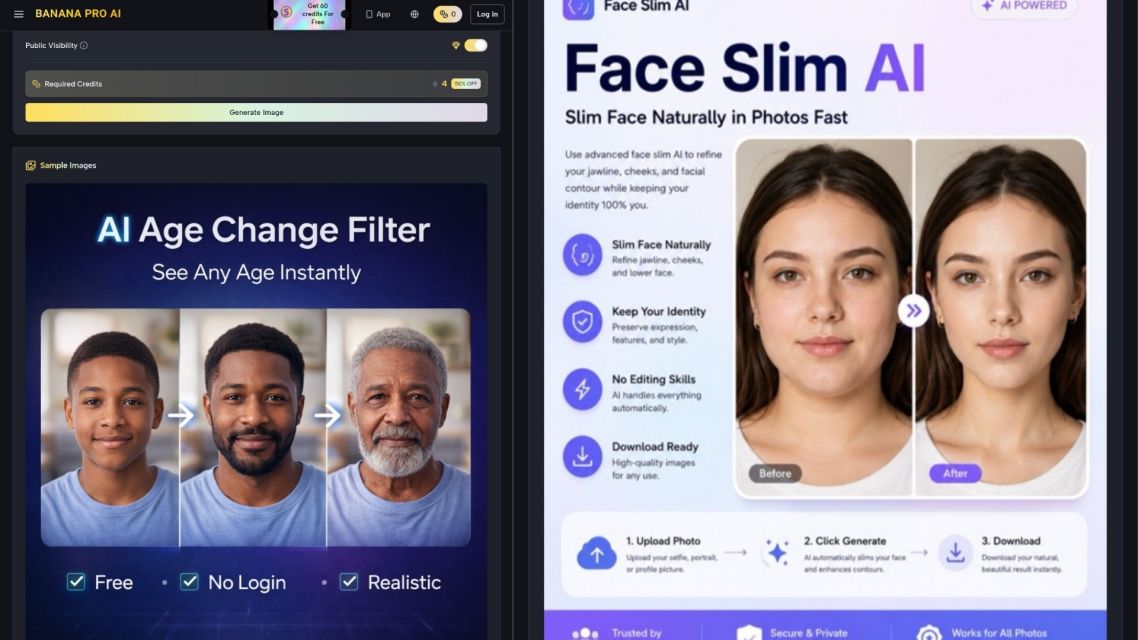
AI age change filter & Face Slim AI – bananaproai via bananaproai.com
When we evaluate the failure points in a generative campaign, “character bleed” is usually at the top of the list. In a standard text-to-image workflow, the model attempts to synthesize an image based on the statistical average of its training data for a given set of words. If you prompt for “a woman in a blue suit,” the model generates a statistically probable woman. In the next frame, it generates another—but since the seed noise and the latent mapping have changed, her facial structure, height, and even the shade of the fabric will deviate.
For performance marketers and creative teams, this inconsistency breaks the “suspension of disbelief” required for brand storytelling. If a protagonist looks like a different person in every social ad or video snippet, the brand identity loses its anchor. Quantitatively, the impact is felt in the revision cycle. If a team generates 100 images but only three maintain enough subject continuity to be used together, the efficiency gain of AI is effectively erased by the manual overhead of curation and “fixing it in post.”
The limitation here is fundamental: most foundational models do not have a concept of “object permanence.” They are predicting pixels, not understanding a 3D subject. This is why teams are increasingly looking toward specialized latent anchors to bypass the randomness of raw prompting.
Benchmarking Nano Banana Pro for Latent Stability
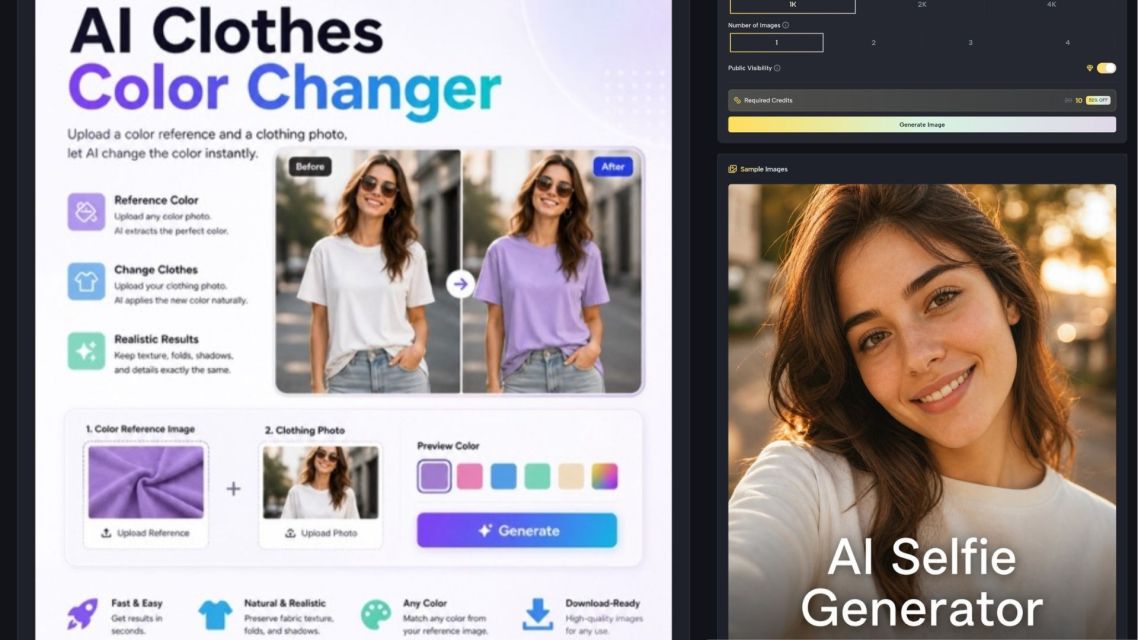
Chotes changer &AI selfie generator-bananaproai via bananaproai.com
In our testing of various creative pipelines, Nano Banana Pro has emerged as a functional solution for teams requiring higher-than-average subject retention. Unlike generic generators that treat every prompt as a fresh start, this tool utilizes a more rigid adherence to reference geometry. This is particularly visible when examining how it handles facial geometry versus textural descriptors.
In a high-entropy environment—where you might be changing the background from a neon-lit city to a sun-drenched beach—most models lose the character’s specific facial proportions. Nano Banana Pro tends to isolate the subject’s core features more effectively. It appears to prioritize the spatial relationship of facial features (the distance between eyes, the bridge of the nose, the jawline) over the stylistic noise of the environment.
One of the most practical features for creative leads is the Canvas Workflow. Rather than generating a full image and hoping the character is correct, teams can use the AI Image Editor capabilities to isolate character assets from background hallucinations. By generating the subject in a controlled, neutral environment first and then utilizing the Nano Banana logic to place that subject into different scenes, the rate of identity failure drops significantly. This “isolation-first” approach is the current benchmark for maintaining a stable subject library.
Bridging the Gap Between Static Frames and Motion
The difficulty of maintaining identity doubles when moving from static imagery to video. Temporal consistency—the smoothness of movement and the stability of the subject over time—is the “final boss” of AI media production. This is where Banana AI enters the pipeline as a bridge.
When transitioning from an image-to-video prompt, the “Flicker Threshold” becomes the primary metric for success. High flicker occurs when the model loses track of a subject’s details between frames, leading to shimmering clothes or morphing faces. Utilizing a reference image from a stable Banana Pro generation allows the video engine to have a visual “source of truth.”
However, we must be realistic: even with advanced tools, the transition from a 2D reference to a 3D motion path is not yet perfect. A common workflow involves using an image-to-video approach where the first frame is a high-fidelity render of the character. This ensures that the video starts with the correct identity, even if the model begins to drift slightly by the end of the clip. For creators, the strategy is to keep clips short—typically 3 to 5 seconds—and stitch them together in traditional editing software to prevent the cumulative error that occurs in longer generative sequences.
Observed Limitations and the Residual Drift Problem
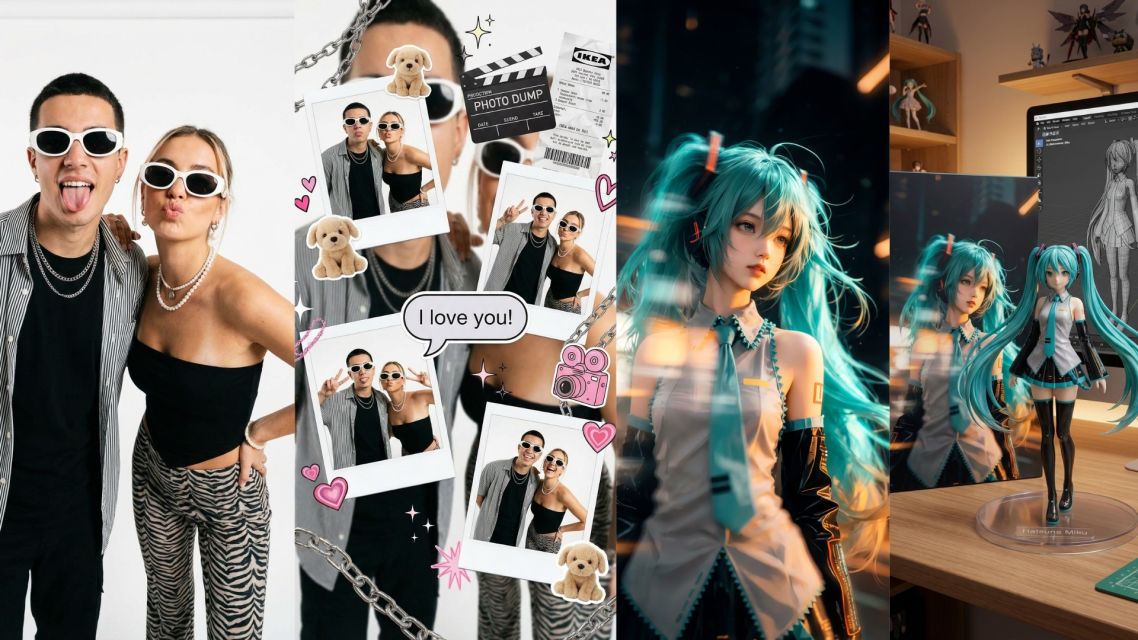
Before-and-after results from Banana Pro AI – bananaproai via bananaproai.com
Despite the advancements in tools like Banana AI, it is critical to acknowledge where the technology still hits a wall. Expectation management is the most important part of a creative lead’s job.
One primary area of uncertainty is the “Extreme Angle” failure. Even the most stable models struggle when a character is asked to perform a 180-degree rotation. Because the AI is often working from a 2D reference, it has to “hallucinate” what the back of a character’s head or the rear of a specific outfit looks like. In many cases, this results in a sudden change in hair length or the disappearance of backpack straps. If your storyboard requires a character to turn around, you should expect to generate ten times the amount of footage to find one “lucky” take where the identity remains intact.
Furthermore, there is a lingering issue with long-form consistency. We cannot yet conclude that any generative AI can maintain 100% clothing accuracy—such as the specific pattern on a tie or the number of buttons on a coat—over 60 seconds of continuous video. The “latent memory” of these systems is simply not designed for that level of granular persistence yet. Human checkpoints remain a necessity. A human editor must still vet every “hero” asset to ensure that the character hasn’t subtly morphed into a different person over the course of a campaign.
Standardizing the Subject Bible for AI Teams

For teams managing multiple creators, the only way to scale without losing quality is to move away from individual experimentation and toward a “Subject Bible.” This is a central repository of master assets that serves as the foundation for all subsequent work.
- The Master Seed Library: Using Nano Banana Pro, create a set of “Neutral Identity” images. These should be high-resolution portraits and full-body shots of the character in neutral lighting. This library ensures that every team member, regardless of their individual prompting style, starts from the same latent coordinates.
- Workflow Integration: Define when to move between tools. For example, use Banana Pro for the initial character design and environmental concepting, but switch to the AI Image Editor for “surgical” consistency fixes—such as fixing a character’s eye color or removing a hallucinated extra finger—before the image is ever used for video.
- Defining Acceptable Drift: Not every asset needs to be perfect. For top-of-funnel social media content, a 10% drift in character identity might be acceptable if the energy and pacing of the video are high. For “hero” assets, such as a website landing page or a brand film, the tolerance for drift should be near zero. Setting these tiers early prevents the team from over-engineering assets that don’t require cinematic perfection.
The goal of a creative operations lead is to build a repeatable asset pipeline. By treating generative tools not as magic wands, but as sophisticated latent-space engines that require anchoring, teams can finally move past the “drift” and toward actual storytelling. Tools like Nano Banana provide the necessary guardrails, but the ultimate success of the pipeline still depends on the technical rigor of the team managing it. Professional AI creation is no longer about who can write the best prompt; it’s about who can best control the latent space.
If you’re exploring AI image-to-video workflows or building generative content at scale, share this article with your creative team or fellow creators. Many people still focus only on prompts, even though the real challenge is maintaining character consistency and latent stability across every frame.
ADVERTISEMENTS