

Creating studio-quality music with code used to be nearly impossible. Now, platforms like Suno have made it possible to generate full-length songs with vocals and instrumentation from a simple text prompt. However, because there is no direct, open-access developer portal for the official Suno API, engineers are stuck dealing with complex workarounds. Building your own integration usually means managing fragile account pools, handling sudden rate limits, and coding complex queue systems just to prevent failed requests. This is why software teams are turning to third-party API aggregators and proxy services to handle the heavy lifting.
How We Compare
To help you find the most stable way to add music generation to your app, we tested these 10 platforms using real-world developer workloads. Our comparison focuses on these core areas:
- Audio Quality & Controls: Does the platform support Suno v3/v3.5, custom lyrics, and clean instrumental parsing?
- Callback Reliability: How quickly and reliably does the system trigger webhooks once the audio processing is done?
- Concurrency limits: Can the provider handle dozens of parallel music generations without dropping requests?
- Actual Cost: We broke down the pricing to show you the real cost of a single generation request (which typically gives you 2 song clips)
- Ecosystem Integration: Can you access other models (like LLMs for writing lyrics or image tools for album art) through the same provider?
Best Suno API Providers & Alternatives Comparison Table
| Platform | Core Audio Support | Suno Generation Cost (Per Request / 2 Songs) | Concurrency Support | Best For |
| ApiPass | Full Suno v3.5 & Multi-modal | ~$0.08 per generation | High (Dynamic Scaling) | Commercial SaaS and stable multi-modal apps |
| Kie AI | Dedicated Suno API | ~$0.09 per generation | Standard (Queue-based) | Simple projects focused purely on audio |
| PiAPI | Unofficial Suno & Video APIs | ~$0.12 per generation | Medium | Hackathons and simple video wrapper creations |
| APIFrame | Midjourney / Stable Diffusion | N/A (Visual alternative/complement) | N/A | Generating companion graphics and album art |
| AIML API | Open-source LLMs & Audio | Pay-per-second (Audiocraft, etc.) | High | Teams focused only on open-source audio models |
| EvoLink | API Orchestration suite | Custom gateway proxy routing cost | N/A | Teams managing and securing their own Suno accounts |
| APIxo | Aggregated Routing Gateway | Model costs + 2.5% premium | High | Multi-engine failover for text generation |
| Hugging Face | Open-Source Audio Models | GPU run-time based (e.g., $0.60/hr) | Custom | Hosting and running your own music models |
| AIGC API | Gateway Proxy / Regional Relay | Token Package / Payload pricing | Medium | Working around regional network firewalls |
| Krater AI | Suite (Voice synthesis) | Credit based | Low-Medium | Creating simple text-to-speech audio clips |
ADVERTISEMENTS
Top Suno API Providers & Alternatives in Comparison
1. Discover More About ApiPass
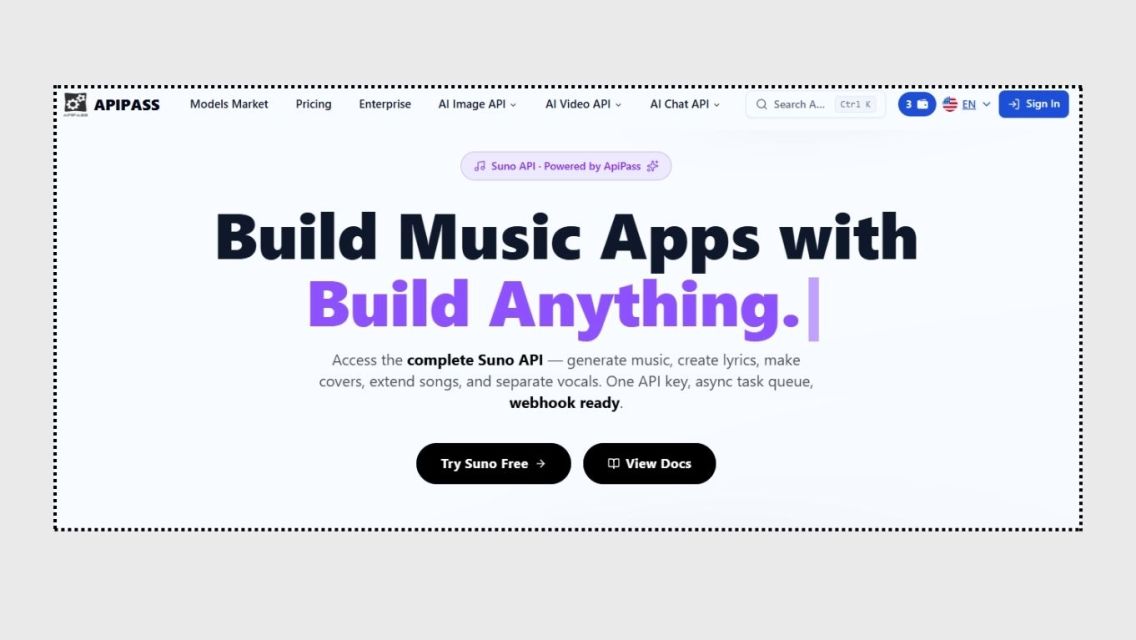
ApiPass is a high-speed API gateway designed for developers who need robust connections to top-tier AI models, offering direct and optimized access to the stable Suno AI API. Instead of forcing you to configure multiple wrappers, it consolidates leading text, image, and generative audio endpoints under a single standard integration.
Features
- Stable Suno AI API Integration: Send custom lyrics, instrumental toggles, and genre tags directly to Suno v3.5 endpoints and receive clean Mp3 links.
- Standardized Format: Use a single coding style to switch between prompt-writing LLMs, music generators, and image engines.
- Intelligent Queue Handling: The platform manages account pools behind the scenes, so your app handles spikes in user traffic without getting blocked.
- Real-Time Logging: Track your data usage, latency, and costs directly from a clean developer dashboard.
Pricing
ApiPass uses a simple pay-as-you-go system with a low $5.00 minimum deposit. Generating a pair of high-quality song files costs about $0.08. Scale users automatically receive volume discounts up to 15%.
Pros and Cons
- Pros: Highly stable asynchronous callbacks (webhooks); excellent multi-modal support; no maintenance headache.
- Cons: Tailored for developers; there is no drag-and-drop playground for non-programmers.
Best for High-Volume Music Generation
SaaS startups, automated content tools, and video apps that need a reliable, high-volume production endpoint. Its production-ready infrastructure is designed to handle large volumes of requests efficiently, making it easier to integrate AI music generation into products without sacrificing performance or reliability.
2. Kie AI
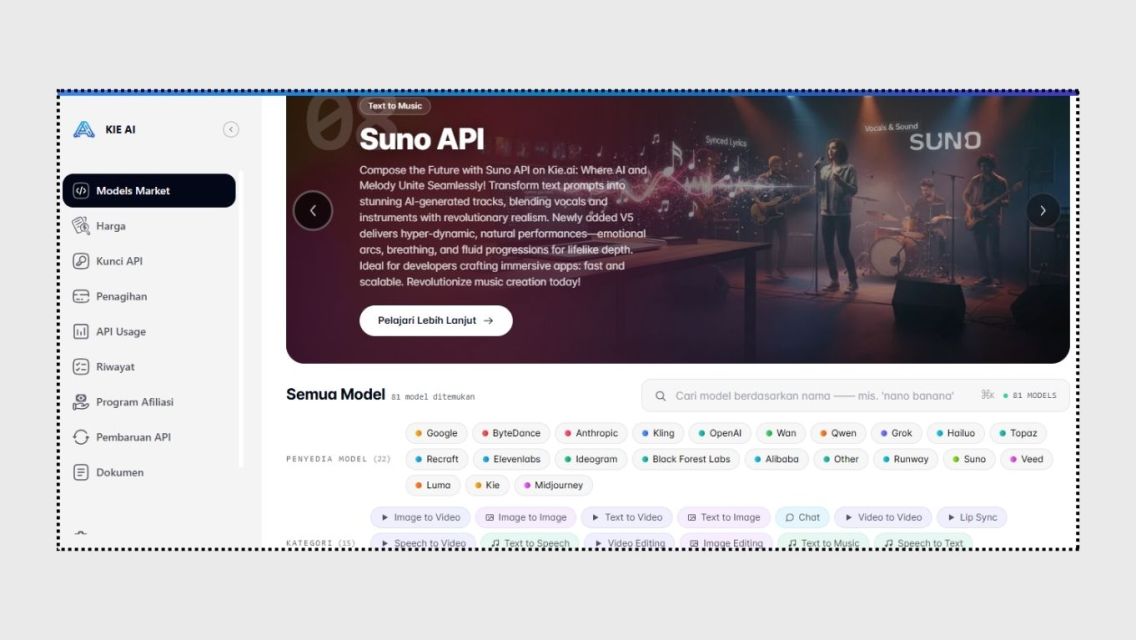
Kie AI is a direct-connect proxy platform built primarily to help developers call popular visual and musical generators without handling the complex account setups themselves.
Features of Kie AI
- Direct API access proxy for Suno v3.
- Simple payloads for passing custom track descriptions, style tags, and lyrics.
- Asynchronous event webhooks that return completed audio URLs.
Pricing
This platform relies on credit-based packages:
- Basic Plan: $9.90 for 1,000 credits (~$0.09 per standard track generation).
- Large Plan: $49.90 for 6,000 credits (~$0.08 per generation).
Pros and Cons
- Pros: Very straightforward and easy to set up if you only want to generate audio.
- Cons: Does not offer a broader suite of models like premium text LLMs or advanced video generators.
Best for
Niche applications and experimental projects that only require raw audio synthesis.
3. PiAPI
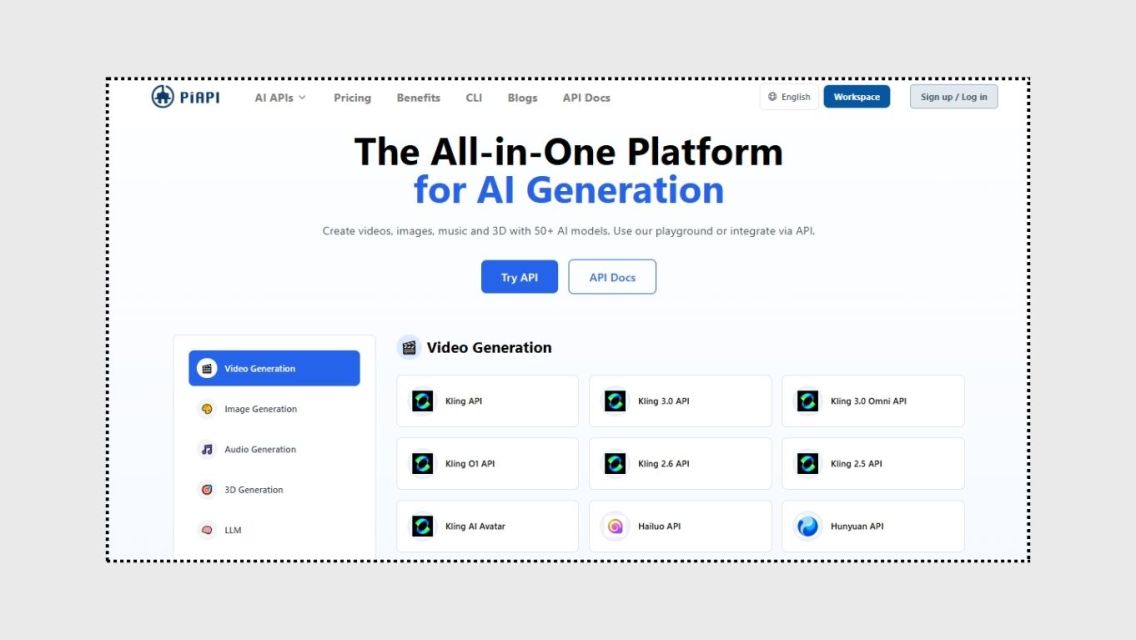
PiAPI is a unified AI API platform that gives developers access to multiple generative AI models through a single integration. Instead of connecting to separate APIs for image, video, music, or language models, developers can use PiAPI to simplify integration and build AI-powered applications more efficiently.
If you want to use this AI API, PiAPI builds unofficial API bridges for popular creative tools that do not offer official public developer programs.
Features
- Suno v3.5 video and raw audio generation support.
- Bridges to automated video editors (like Kling and Runway) alongside audio.
- JSON response formatting that outputs complete media assets directly.
Pricing
Uses task-based pricing tiers:
- A basic $10.00 deposit converts to roughly 85 Suno tasks (~$0.12 per music generation).
- Higher volume deposits lower the cost per individual generation task.
Pros and Cons
- Pros: Let you pair music with video generation engines in the same workspace.
- Cons: Higher price per song generated compared to more streamlined proxy platforms.
Best for
Indie developers who want to build automated video-creation workflows quickly.
4. APIFrame
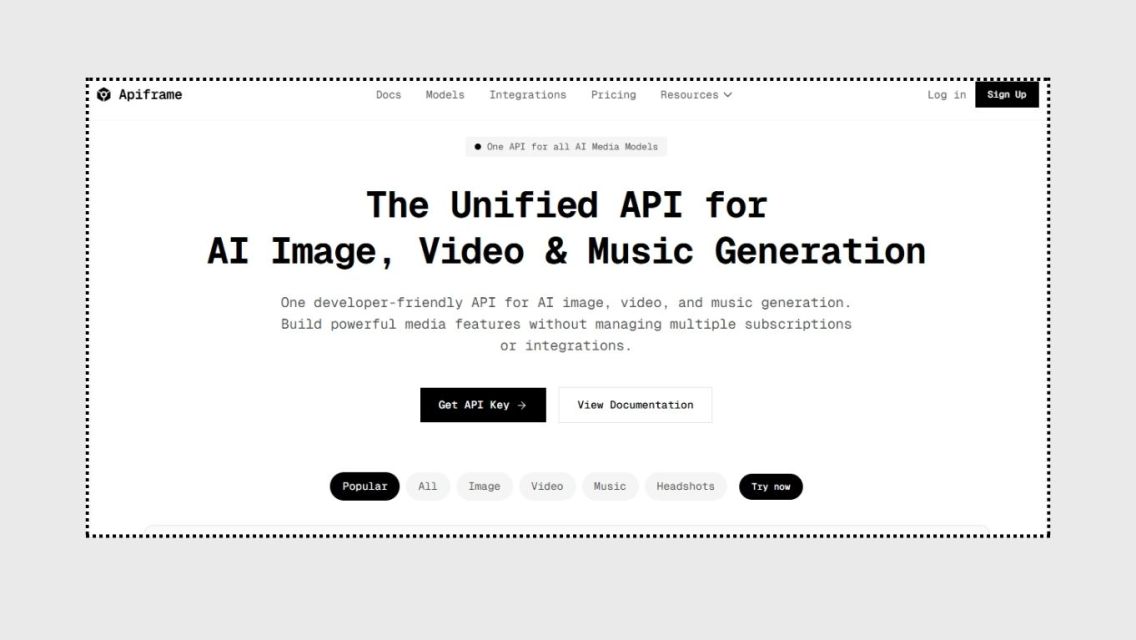
APIFrame is a stable proxy service focused mainly on image generation platforms, particularly Midjourney and Stable Diffusion.
Features
- Unofficial Midjourney automation systems.
- Automatic account rotation to maintain fast generation times.
- Reliable webhooks for hosting and exporting image files.
Pricing
- Starter Plan: $19/month (limits you to 1,000 graphics runs).
- Pro Plan: $49/month (handles up to 3,000 runs simultaneously).
Pros and Cons
- Pros: Perfect for creating matching graphics, album art, and visual cards for your music.
- Cons: Does not offer any text-to-music or Suno API endpoints.
Best for
Visual designers and marketing platforms that need to generate high-quality cover art for audio files.
5. AIML API
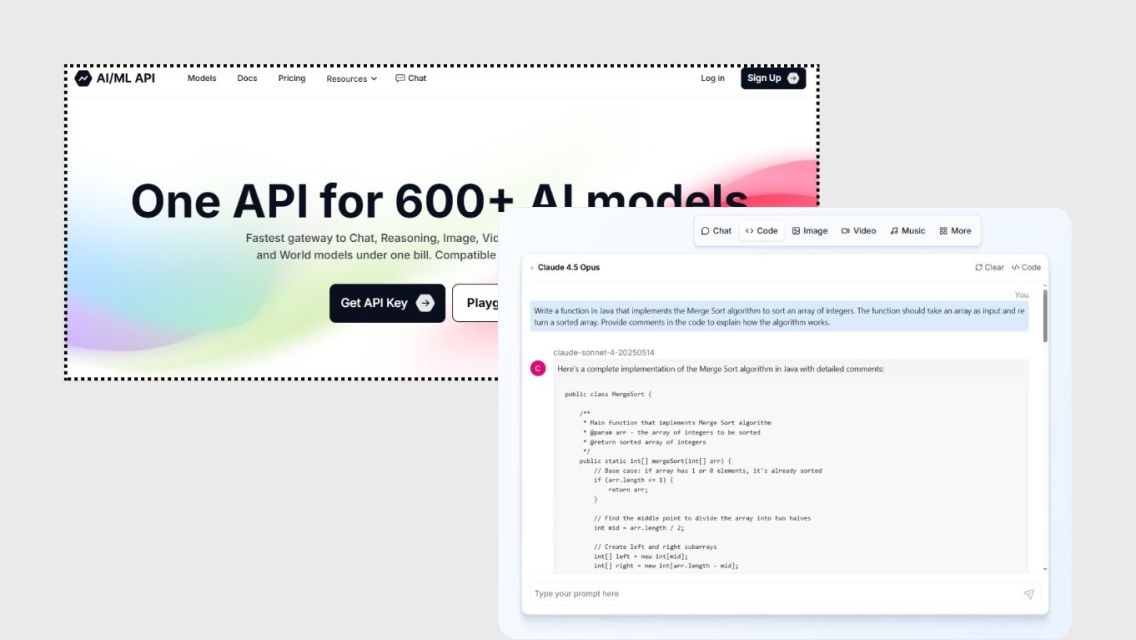
AIML API is a broad serverless aggregator that gives developers access to over 100 open-source and proprietary models.
Features
- Hosts open-source music tools like Meta’s Audiocraft alongside general LLMs.
- Clean, single-endpoint setup style.
- Fast prompt response times for standard models.
Pricing
Uses a pay-as-you-go credit structure starting at $10.00. Standard text models cost $2.50 per million input tokens, while open-source audio generation is billed per compute second.
Pros and Cons
- Pros: Great for running cheap open-source alternatives if you do not need proprietary models.
- Cons: Open-source audio models do not generate the polished vocal tracks that Suno produces.
Best for
Academic projects and teams looking to test or benchmark open-source audio tools.
6. EvoLink
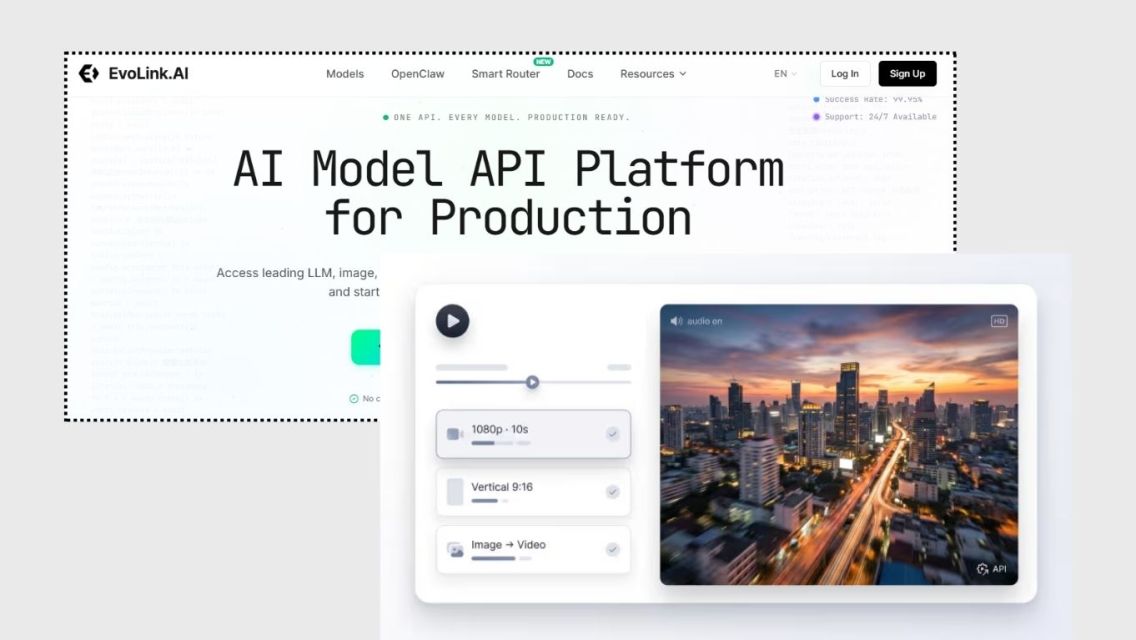
EvoLink is an API design and testing toolkit built to help development teams design, mock, and monitor their own internal connections.
Features
- Active request mocking and testing interfaces.
- Secure vaults to manage your teams’ API tokens in one place.
- Detailed traffic logs for debugging connection errors.
Pricing
- Free Plan: Basic mock testing features for single users.
- Pro Plan: $15.00/user per month (billed annually).
Pros and Cons
- Pros: Highly useful if you are hosting your own private Suno account pool and need a way to manage internal request traffic.
- Cons: Is not an out-of-the-box model provider; you have to find and connect the APIs yourself.
Best for
Enterprise development teams that want to build and manage their own internal API bridges.
7. APIxo
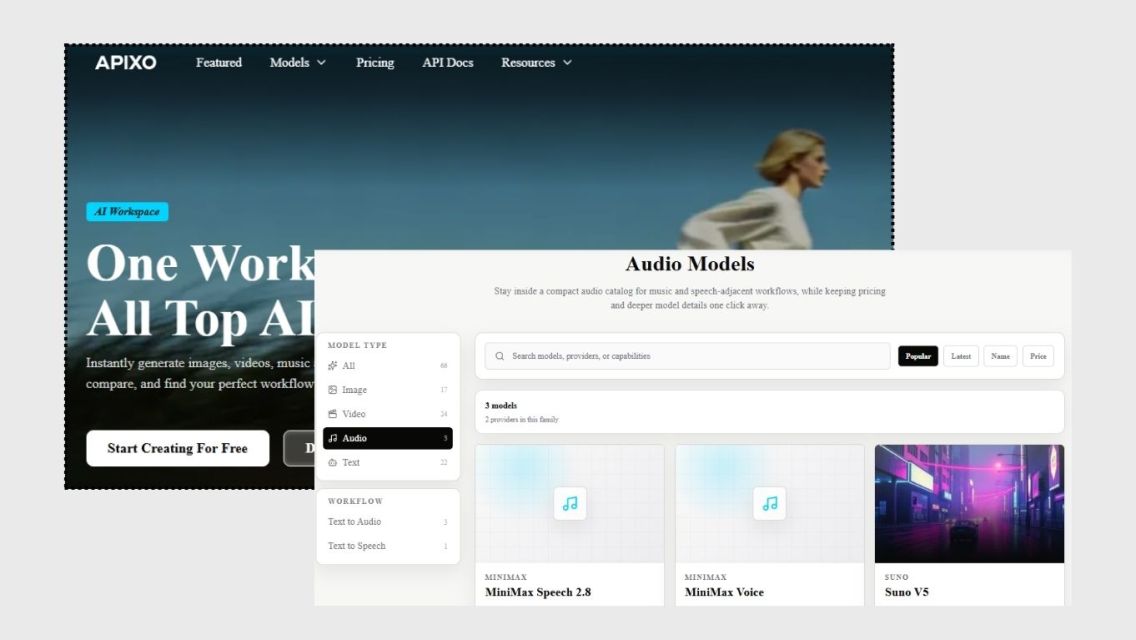
APIxo is an intelligent API router designed to prevent service interruptions by swapping model routes automatically if a provider goes down.
Features
- Automatic failover between major API routes.
- Consolidated payment systems for easier billing across multiple vendors.
- Live uptime dashboards and error logs.
Pricing
Standard downstream model pricing plus a small 2.5% routing platform fee (for example, standard GPT-4o input costs $2.56 per million tokens instead of $2.50).
Pros and Cons
- Pros: Keeps your applications running smoothly if text-handling APIs fail.
- Cons: Does not route heavy, multi-layered visual or musical generation systems.
Best for
Customer support software and text-heavy tools where downtime is not an option.
8. Hugging Face (Inference Endpoints)
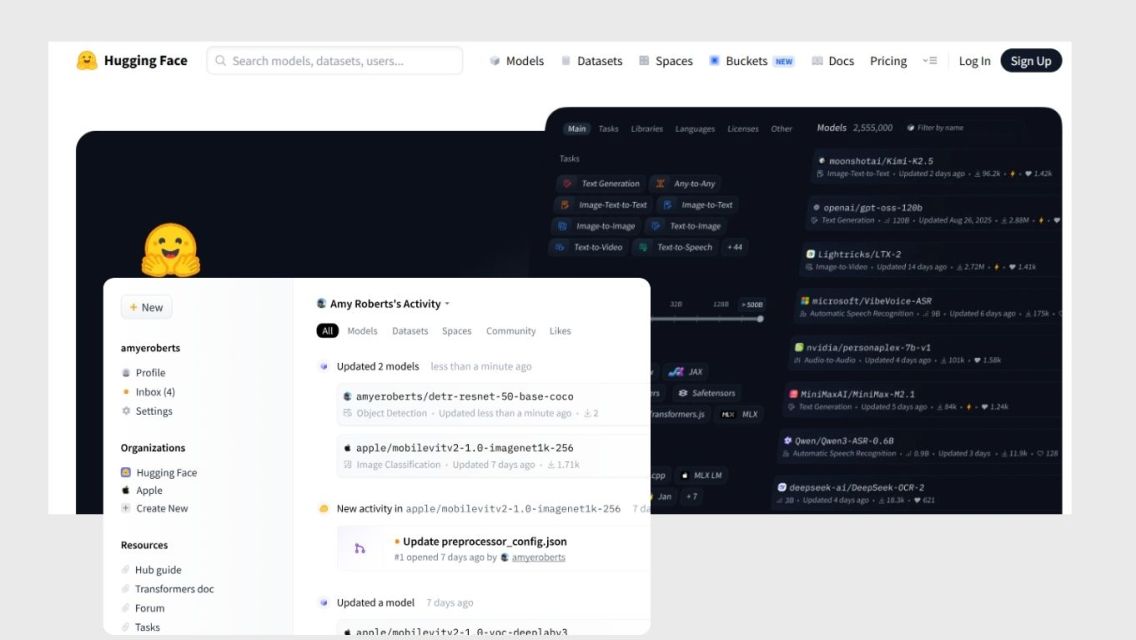
Hugging Face is the largest hub for open-source AI, allowing developers to set up and run private servers for thousands of community-built models.
Features
- Host open-source sound and music synthesizers (like Stable Audio or MusicGen).
- Pick your own virtual hardware based on your computing demands.
- Clean Python and Javascript integration libraries.
Pricing
Billed by the hour based on your active compute setup:
- Standard CPU: Starting at $0.06/hour.
- Mid-range GPU (Nvidia T4): Starting at $0.60/hour.
- High-end GPU (Nvidia A100): Starting at $4.13/hour.
Pros and Cons
- Pros: Total control over model weights; zero dependency on third-party commercial platforms.
- Cons: Requires manual server setup and maintenance; open-source music quality lags behind proprietary systems.
Best for
Machine learning engineers who want to deploy, test, and run private, customized audio models.
9. AIGC API
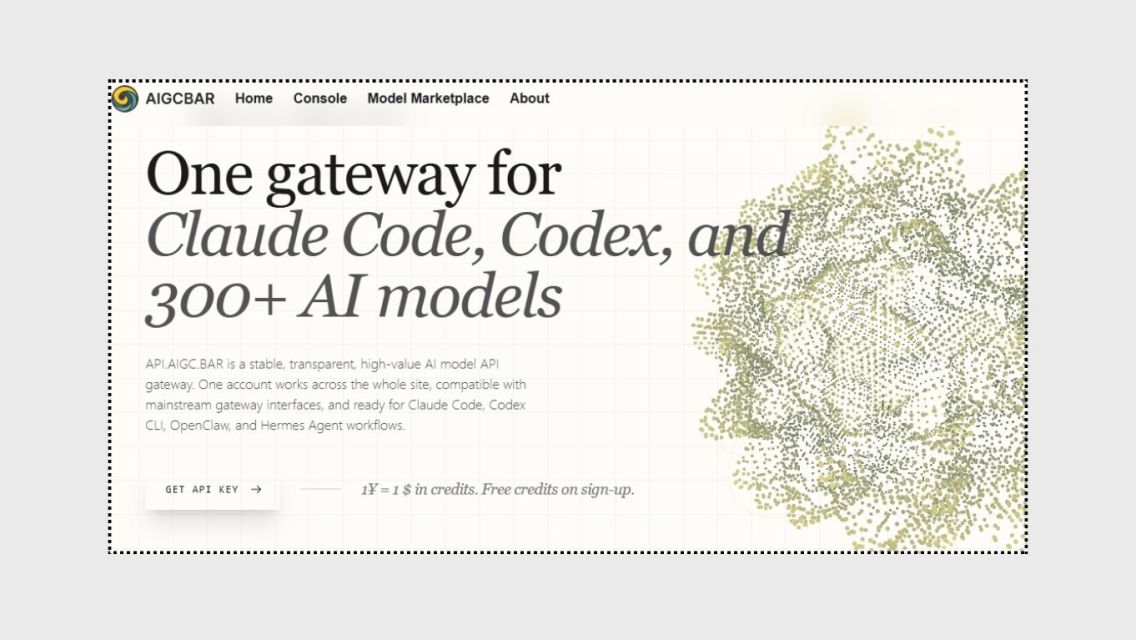
AIGC API is a developer-focused relay network designed to bypass strict regional network delays and connection drops.
Features
- Optimized server routing that does not require VPN workarounds.
- Flexible local payment packages for global services.
- Simple configuration setups.
Pricing
Token package purchases start with an entry tier of $5.00 and run up to high-capacity developer packages priced at $100.00.
Pros and Cons
- Pros: Highly effective at maintaining clean connections in regions with heavy firewalls.
- Cons: Developer documentation is optimized for specific regional markets and might require translation.
Best for
Distributed software teams developing applications across different international network zones.
10. Krater AI
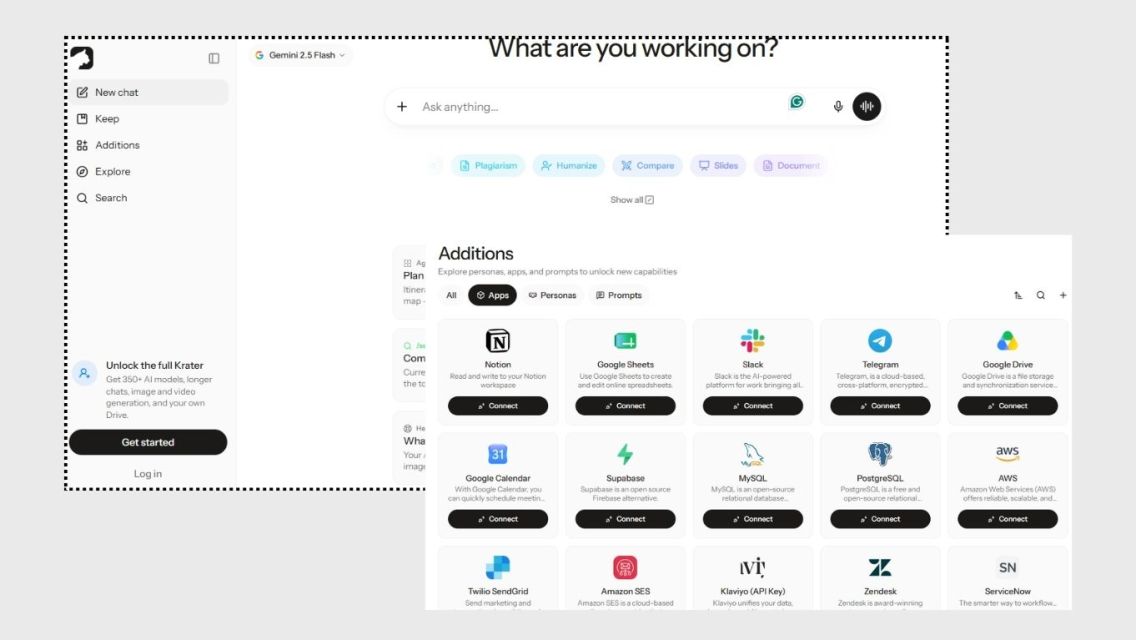
Krater AI is a lightweight workspace that combines simple back-end endpoints with an easy web dashboard for non-technical users.
Features
- Clean text copywriting templates.
- Modern text-to-speech voice generators.
- Simple REST APIs paired with a graphic web dashboard.
Pricing
- Creator Plan: $15/month (limits you to 500 standard generation tasks).
- Professional Plan: $39/month (gives you unlocked processing speeds).
Pros and Cons
- Pros: Great interface for non-technical team members who want to generate assets quickly.
- Cons: Geared toward standard content generation rather than complex, multitrack music APIs.
Best for
Freelancers and content creators looking to generate text layouts and basic voiceovers in one dashboard.
Key Takeaways: How to Choose the AI Music Generator API that Suits You Best
Choosing the right backend support is critical if you want to keep your application fast and cost-effective. Here is how to make the right choice:
- For simple, audio-only startups: If your product only needs basic text-to-song rendering without complex layout features, specific services like Kie AI or PiAPI can help you deploy your application quickly.
- For complete operational control: If you want to avoid third-party platforms altogether and run models on private infrastructure, hosting open-source code via Hugging Face Inference Endpoints is your best bet.
- For scale and stability: If you are building a commercial application that requires premium lyrics generation, high-volume graphic design, and a stable, low-latency Suno AI API pathway, ApiPass is the most reliable option. By putting diverse models into a single, high-concurrency gateway, it removes the headache of managing multiple providers and keeps your production costs low.
Conclusion
Adding broadcast-ready music and audio generation to your software no longer requires coding fragile workarounds. By choosing a dedicated API gateway, you can focus on building user features instead of debugging backend connection drops. For startups and businesses that need to scale globally, using a unified system like ApiPass minimizes your engineering overhead and gives you reliable access to the best generative tools on the market. Create your developer account, grab your API key, and begin testing high-fidelity audio today!
ADVERTISEMENTS