

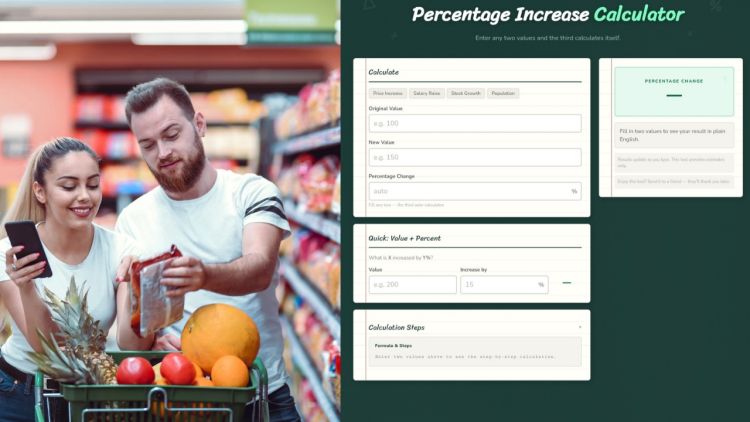
Let’s be real. Most of us scroll past maths the second we leave school, convinced we’ll never need it again. Then adult life hits, and suddenly you’re staring at a “70% OFF” flash sale, a streaming subscription that mysteriously got more expensive, and a savings app that keeps talking about growth.
Turns out, there’s one tiny skill quietly running the show behind all of it: knowing how to read percentages.
Master it, and you instantly become the friend who never gets fooled by a fake discount or a sneaky price hike. Good news? It takes about five minutes to actually get it. Here’s the lowdown, minus the boring textbook energy.
Why This Actually Matters (No Cap)
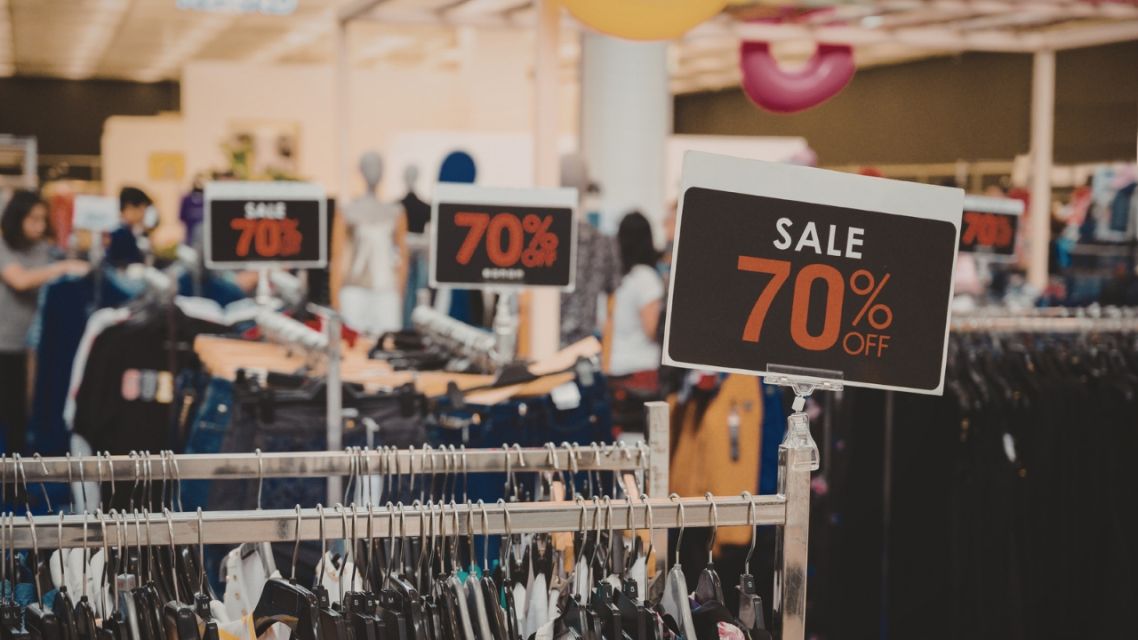
A big discount is only a good deal if you understand the real savings-canva via canva.com
Think about how often numbers try to influence your choices in a single day:
- That “buy now, only 30% left in stock” banner.
- The influencer flexing “my followers grew 200% this month.”
- The cafe menu that quietly went up by Rp5,000.
Every single one of these is a percentage story. If you can’t read it, you’re basically letting other people decide what’s a good deal for you. Once you get comfortable with percentages, you start seeing through the hype. It’s low-key one of the most useful life skills nobody hyped up in school.
The Only Formula You Need
A simple formula can help you make smarter money decisions-canva via canva.com
Don’t panic, there’s just one formula, and it’s straightforward:
How it works in real life:
Say your favourite streaming plan jumped from Rp50,000 to Rp65,000 a month.
- Subtract to get 15,000.
- Divide that by the original 50,000 to get 0.3.
- Multiply by 100.
That’s a 30% increase. Now you can decide, with actual facts, whether it’s still worth it or time to share an account with your squad.
The Sneaky Discount Trick to Watch For

Compare prices before trusting a big discount-canva via canva%20com
Here’s where brands play games. A giant “50% OFF” tag feels irresistible, but some stores bump the original price up first, then slap on a discount so you feel like you scored.
The ultimate counter-move? Always ask what the honest starting price was.
| Scenario | The Math | The Reality |
|---|---|---|
| Honest Discount | Rp200,000 drops to Rp150,000 | A genuine 25% saving. |
| Fake Discount | Secretly hiked to Rp300,000, then “50% off” to Rp150,000 | The “discount” is just the normal price wearing a costume. |
The 3 Mistakes That Trip Everyone Up

Verify the numbers before believing the discount-canva via canva.com
A few classic slip-ups catch even smart people. Avoid these at all costs:
- Dividing by the wrong number: Always divide by the original value, never the new one, or your answer comes out wrong and makes a change look smaller than it is.
- Percentage vs. Percentage Points: If an interest rate goes from 10% to 15%, that is an increase of five percentage points. But relative to where it started, it’s actually a 50% jump. Very different vibes, especially on a paylater bill.
- Assuming a rise and fall cancel out: This is the wildest one. Look at what happens if your side-hustle income goes up 40% one month, and drops 40% the next:
- Base: 100
- +40% increase: 140
- -40% decrease: 84 (You actually lost money!)
The Lazy (Smart) Way to Get the Answer
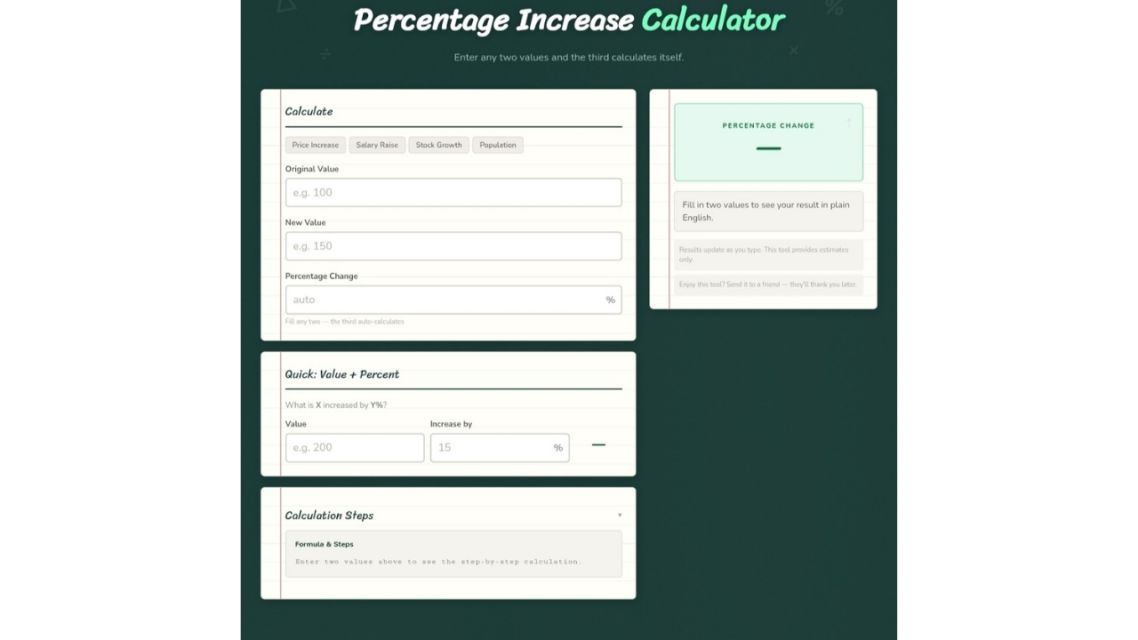
Check percentage changes instantly wherever you are-percentageincreasecalculator.app via percentageincreasecalculator.app
Look, understanding the formula keeps you sharp, but nobody wants to do mental maths while standing in a checkout line or vibing on a sale page at midnight.
For quick, no-stress answers, a simple tool like this Percentage Increase Calculator lets you type in the old and new values and see the real percentage change instantly. It works perfectly on your phone, so you can fact-check a deal or a price hike on the spot without doing any brain gymnastics.
Put It Into Practice This Week

Practice with everyday purchases to build better money habits-canva via canva.com
Ready to level up? Start small.
- Next time you see a discount, work out the real saving.
- When a subscription creeps up, calculate the actual percentage.
- Track your savings or your content stats and see the real growth.
Do this a few times and it becomes second nature. Honestly, you’ll start noticing how much marketing relies on people never bothering to check.
Bottom Line: Reading percentages isn’t about being a maths genius. It’s about not getting played. Learn the formula, dodge the classic traps, and keep a calculator handy for speed. You’ll move through your money life with way more confidence, and a lot less FOMO over “deals” that were never really deals in the first place.