
The prevailing narrative in generative media suggests that we are one prompt away from a finished cinematic frame or a high-converting ad creative. We are told that the intelligence of the model; whether it’s Flux, Nano Banana, or a proprietary video engine; is the primary driver of quality. In a vacuum, this is true. But in a professional production environment, a raw generative output is rarely a finished product. It is a high-fidelity sketch.
Creators moving from hobbyist experimentation to repeatable commercial workflows are quickly realizing that “prompt engineering” is the easy part. The real work occurs in the Refinement Layer. This is the stage where the creative lead steps in as an editor-in-chief, scrubbing the output for artifacts, correcting compositional errors, and ensuring brand consistency. Without a dedicated AI Photo Editor to handle the surgical corrections that text-to-image models inevitably miss, the workflow remains a game of chance rather than a disciplined process.
The Death of the One-Click Masterpiece

The “one-click” myth has done a disservice to the creative industry by implying that the human element is being phased out in favor of better algorithms. In reality, the operator’s role is shifting from the person who makes the brushstrokes to the person who ensures the brushstrokes make sense.
Raw generative outputs frequently fail brand safety and aesthetic standards for predictable reasons. A model might generate a perfect architectural rendering but fail to understand that a logo in the background should be legible, not a halluncinated squiggle. Or, it might produce a stunning portrait where the lighting on the subject doesn’t match the atmospheric haze of the background.
This is the “Messy Middle” of GenAI. It’s the gap between a prompt-based draft and a deliverable asset. Professional creators cannot afford to re-roll a prompt 50 times hoping the AI eventually gets the hands right or places an object in the correct third of the frame. It is far more efficient to take a “90% correct” image and move it into a specialized environment to fix the final 10%
Constructing the Modular Production Stack

The most effective creative teams are moving away from monolithic “do-it-all” platforms. Instead, they are building modular pipelines where each tool has a specific job. In this stack, the generator is the engine of variety, but the Photo Editor is the engine of quality control.
When you treat an AI Photo Editor as the central hub of your workflow, you gain back the control that prompting takes away. Prompting is a declarative process: you ask for something and hope the black box understands. Editing is an imperative process: you see a flaw and you correct it.
For instance, when working with models like Flux or Seedream, a creator might get a near-perfect result that features a distracting element in the background. In a primitive workflow, the creator might try to use negative prompts or re-describe the scene to exclude that element. This often changes the entire composition, losing the “magic” of the original generation. In a modular workflow, the creator simply exports the frame, uses an object removal tool, and moves on. This repeatability is what separates a professional pipeline from a series of lucky accidents.
Practical Refinement: The Workflow in Action
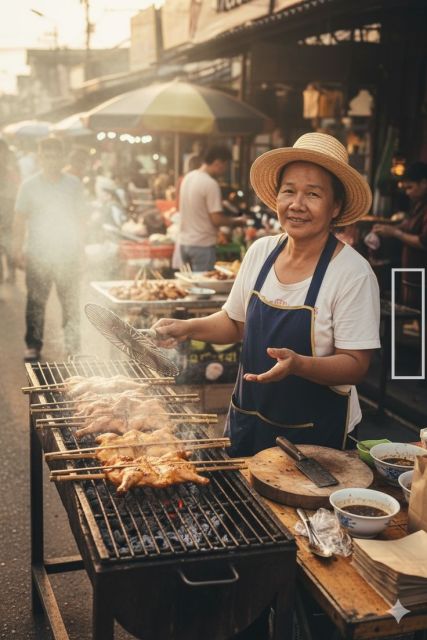
You can see the failure in the imperfect AI generation process in the white box, where the legs of the human figure were not successfully created. Thats why, PicEditor AI could be a solution to fix it.
To understand how this looks in practice, we have to look at the specific points of failure in generative media. Most “ruined” AI images suffer from a few common issues: weird artifacts in the eyes, anatomical inconsistencies, or unwanted background clutter.
Using a platform like PicEditor AI, a creator can bridge these gaps using specific functional modules. If a character generation has the right vibe but the wrong face for the campaign, a Face Swap tool allows for brand-consistent casting without re-generating the entire environment. If the resolution is slightly soft, a common issue with high-speed models like Nano Banana, the focus shifts to in-editor upscaling.
There is an inherent efficiency in using these tools over external third-party software. When the upscaling, object erasing, and background manipulation happen within the same ecosystem where you test prompts, the friction of “context switching” disappears.
This refinement layer is also the gateway to consistent video. One of the biggest challenges in AI video is temporal consistency, the way objects change shape or disappear between frames. The most reliable way to create a high-quality video is to start with a “gold standard” static image. You use an AI Photo Editor to perfect every pixel of that source image, and only then do you feed it into an image-to-video model like Kling or Veo. If the source image is flawed, the video will amplify those flaws. If the source image is refined, the animation has a stable foundation.
The Limits of Automated Correction
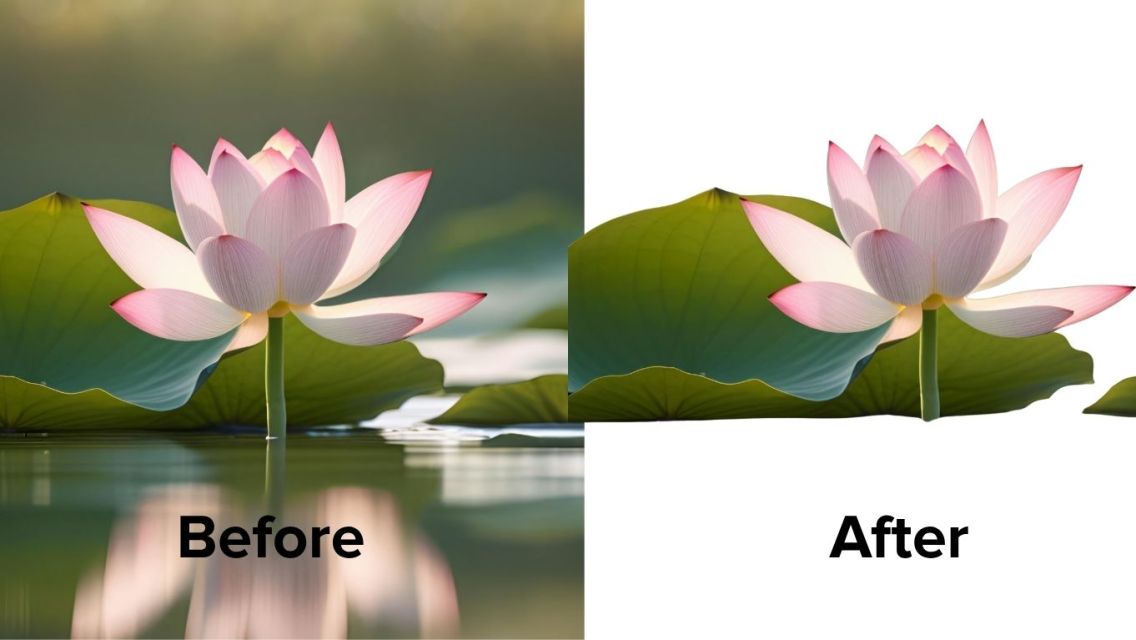
Regular background erasers cannot be used for images that still have “semi-transparent” complexity.
It is important to maintain a healthy skepticism about what these tools can achieve. Even with a robust AI Photo Editor, some images are beyond saving. This is what we call the “compositional trap.”
If an AI model generates a person with a fundamentally broken skeletal structure or an impossible physical pose, an editor can’t always “fix” it. You can erase an extra finger or smooth out a skin texture, but you cannot easily re-pose a subject without introducing significant noise or losing the original’s aesthetic integrity. In these cases, human judgment is the only tool that matters. Knowing when to edit and when to trash a generation is a skill that only comes with volume and experience.
Furthermore, there is a limit to semantic understanding in automated tools. For example, background removal has become incredibly advanced, but it still struggles with “semi-transparent” complexity. If you are trying to isolate a subject with frizzy hair or a glass of water against a busy background, the AI may create harsh edges or “eat” into the subject. We are not yet at the point where these tools are 100% “set and forget.” Every automated action requires a human eye to verify that the mask is clean and the lighting remains logical.
Future-Proofing Your Creative Operations
As AI models become more accessible, the barrier to entry for generating “cool” images is effectively zero. This means the market value of “prompting” is rapidly approaching zero as well. The real value is shifting toward the ability to curate, refine, and integrate these assets into a cohesive brand story.
To future-proof a creative workflow, teams should focus on building a “template library” of refined prompts and corresponding editing steps. Instead of just saving the prompt that generated a good image, save the sequence: Prompt X -> Upscale 2x -> Object Eraser on background left -> Face Swap with Asset Y. This creates a repeatable recipe that can be handed off to junior editors or scaled across a campaign.
The democratization of high-end production isn’t happening because the generators are getting perfect; it’s happening because the refinement tools are getting more precise and accessible. The ability to fix an image is becoming a more valuable professional skill than the ability to describe one.
In the end, generative AI is just a new way to get “raw footage.” Whether that footage becomes a professional asset or stays a digital curiosity depends entirely on what happens in the last mile of the workflow. The goal is no longer to find the “perfect” prompt, but to build the perfect pipeline where the AI Photo Editor acts as the final arbiter of quality. Only then can we move past the hype and into actual production.